
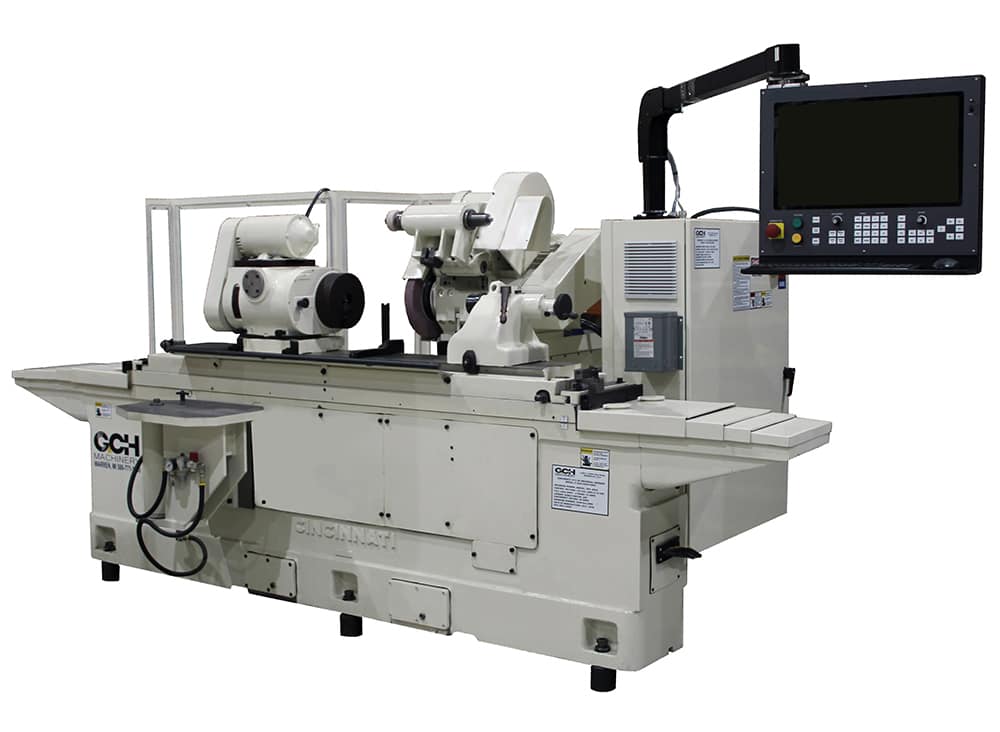
Universal grinders are essential for precision OD and ID grinding, allowing manufacturers to achieve exceptionally tight tolerances. However, continuous operation takes a toll on these robust machines. Over time, heavy usage inevitably causes mechanical wear and misalignment, severely compromising the machine’s accuracy. This degradation leads directly to surface defects, taper issues, and inconsistent part quality that can disrupt an entire production schedule.
Since replacing heavy machinery is an enormous capital expense, manufacturing facilities need a smarter, more cost-effective solution. Professional grinder rebuilding services offer the perfect answer to bring aging equipment back to OEM standards. By relying on GCH Machinery for universal grinder geometry restoration, your facility can reclaim micron-level precision without the massive price tag and long lead times associated with buying a new machine.
Machine Geometry Fundamentals in Universal Grinders
Machine geometry defines the precise physical alignment and relationship between critical grinder components, including the spindle, table, and guideways. When these kinematic chain elements operate in perfect harmony, the grinder easily meets demanding tolerance requirements.A proper geometric setup involves several crucial parameters:
- Straightness along the guideways
- Flatness during table movement
- Parallelism and perpendicularity across all axes
- Spindle runout and concentricity accuracy
Mechanisms of Geometry Degradation
Recognizing the early signs of machine geometry issues in universal grinders starts with understanding how wear actually happens. Even the most durable machines experience mechanical breakdown over years of heavy industrial use.These are the primary factors that cause machine geometry to degrade over time:
- Guideway wear and frictional variability from poor lubrication
- Spindle degradation caused by heavy operational loads
- Thermal effects resulting in structural warping
- Structural fatigue across the machine base
- Drive system wear and excessive backlash
Metrology & Diagnostic Techniques in Universal Grinders
To perform accurate universal grinder alignment correction, technicians must pinpoint the exact source of the mechanical error. Advanced diagnostics are essential for measuring deviations down to the micron before any physical scraping begins.Rebuilders use sophisticated metrology tools to measure these complex errors:
- Laser interferometry for highly accurate axis mapping
- Ball bar testing to verify circularity and interpolation
- Dial indicators and straight edges for physical alignment checks
- Spindle error motion analysis to detect runout
- Surface finish and form testing to evaluate final Ra values
GCH Machinery’s Rebuilding Process for Geometry Restoration
Restoring a machine requires a systematic approach that addresses every single mechanical flaw. GCH Machinery executes a complete universal grinder machine geometry restoration to guarantee better-than-new performance.Our comprehensive remanufacturing process includes these key steps:
- Complete machine teardown and intensive part inspection
- Guideway reconditioning through precision hand-scraping and flaking
- Spindle rebuilds, incorporating chrome plating and new Filmatic bearings
- Axis realignment and strict mechanical geometric correction
- Complete drive system restoration for seamless movement
CNC Calibration & Compensation Techniques
Once the physical mechanics are flawless, electronic calibration ensures the machine runs smoothly. Modern grinder upgrade services blend traditional mechanical scraping with highly advanced software tuning.We implement several compensation methods during the final calibration phase:
- Error mapping to adjust for minute positional deviations
- Servo tuning and continuous feedback optimization
- Thermal compensation systems to ensure temperature stability during grinding
Performance Outcomes of Geometry Restoration
The benefits of universal grinder remanufacturing are immediate and easily measurable on the shop floor. Upgrading your equipment transforms unpredictable machinery into highly reliable, profitable assets.Operators can expect the following operational improvements post-rebuild:
- Micron-level reduction in costly form errors
- Improved surface finish resulting in lower Ra values
- Enhanced overall process capability and throughput
- Greatly reduced vibration and cutting chatter
- Increased uptime and simplified daily maintenance
Industry Applications Requiring Geometry Precision
Certain manufacturing sectors simply cannot afford geometric errors in their grinding processes. Dedicated grinder remanufacturing ensures these critical industries maintain strict compliance and safety standards.Precision geometry is strictly required in the following demanding fields:
- Automotive manufacturing for drivetrain and engine components
- Oil and gas production for heavy-duty pumps and drilling tools
- Aerospace engineering for turbine blades and landing gear
- Tool and die manufacturing for complex molds
Why Choose GCH Machinery for Rebuilding Universal Grinders
Choosing the right partner is vital for a successful retrofit. As one of the world’s leading industrial grinder rebuilders, GCH Machinery brings decades of specialized experience in CNC grinder remanufacturing and retrofitting.We handle everything in-house, from the initial teardown to the final calibration and testing. Instead of a standard one-size-fits-all approach, we provide customized solutions engineered specifically for your unique machine and production application. GCH Machinery proudly delivers proven, guaranteed results across the automotive, aerospace, oil and gas, and tool and die industries.