
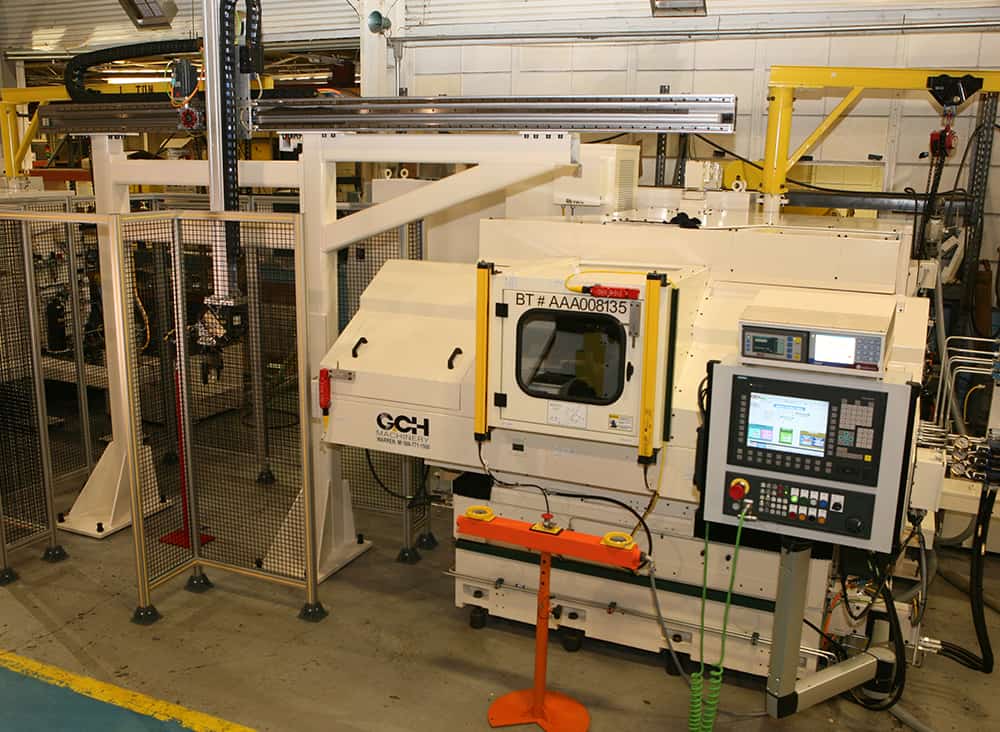
This gradual decline in performance is not just a sign of age; it’s a symptom of specific, identifiable issues. Fortunately, internal grinder remanufacturing can address these root causes, restoring your equipment to OEM specifications or even better. This guide explains the common reasons for internal grinder precision loss and how GCH Machinery’s comprehensive services can bring your machine back to peak performance.
Top Causes of Accuracy Loss in Internal Grinders
When an internal grinder’s repeatability falters, it’s often due to a combination of factors. Understanding these issues is the first step toward fixing internal grinder accuracy issues. Key culprits include:- Spindle Bearing Wear and Runout: The spindle is the heart of any grinder. As bearings wear, they can cause excessive runout, leading to inconsistent part geometry and poor surface finishes.
- Thermal Drift and Heat Transfer: Heat generated during operation can cause machine components to expand and contract, leading to dimensional inaccuracies. While internal grinding generally generates less heat than larger external grinding operations, thermal effects can still contribute to inaccuracy during long cycles or higher-load applications. Although total heat input is lower than external grinding, the confined space inside a bore makes heat dissipation difficult, amplifying thermal distortion.
- Spindle Drive or Motor Degradation: An aging motor or drive system can deliver inconsistent power, resulting in variable spindle speeds and reduced cutting efficiency, which directly impacts finish quality. However, in many internal grinders, spindle accuracy problems are more often linked to spindle or bearing wear rather than motor fluctuations, making spindle assembly condition the primary concern.
- Poor Lubrication or Contaminated Oil: Insufficient or contaminated lubrication increases friction and wear on critical components like ways and slides, degrading the machine’s foundational accuracy. Coolant contamination and debris can also affect internal grinding stability due to the difficulty of chip evacuation inside bores.
- Lack of Machine Automation: Manual processes are inherently less repeatable than automated ones. Older machines without modern automation struggle to keep pace with the demands for consistency and speed. Automation improves consistency but cannot compensate for mechanical wear or incorrect process setup, so it must work in conjunction with restored machine geometry.
- Grinding Wheel Wear, Incorrect Wheel Specification, or Poor Dressing: Wheel condition is one of the most common contributors to accuracy issues in internal grinding. A worn, glazed, unbalanced, or improperly dressed wheel can cause taper, poor roundness, and inconsistent finishes.
Put an End to Precision Loss with GCH Machinery’s Remanufacturing Services
GCH Machinery’s grinder remanufacturing services go beyond simple repairs. We offer a complete solution that addresses every aspect of machine performance, from mechanical integrity to advanced automation.Complete Grinder Rebuild
A full rebuild begins with a complete teardown and inspection. Every mechanical and functional component is meticulously checked for wear, cracks, and misalignment. Key restoration processes include:- Ways and Slides Re-Scraped or Rebuilt: Precision restoration of way and slide surfaces restores flatness, parallelism, and squareness. This achieves excellent smoothness, reduces friction and vibration, and maintains long-term accuracy and repeatability.
- Alignments Restored to Factory Specifications: Using precision measurement techniques, we restore your grinder’s geometry to OEM-level tolerances.
- New Spindle Bearings Installed: We install new bearings with the correct preload, which is critical for high-speed performance, spindle stability, and minimal spindle bearing wear and runout. ABEC-7 or ABEC-9 precision grades used when required.
Grinder Upgrading
GCH Machinery integrates modern technology to enhance your machine’s capabilities. Internal grinder upgrades include:- New Servo Motors and Drives: Modern servos deliver superior positioning accuracy, speed, and responsiveness for tighter control over the grinding process.
- Upgraded CNC or Control Platforms: An internal grinder control retrofit or grinder CNC upgrade provides faster programming, greater automation capabilities, and better process visibility.
- Improved Lubrication Systems: Upgraded systems ensure reliable, clean lubrication, which minimizes friction and extends the life of critical components.
- Enhanced Spindle Assemblies: Spindle improvements allow for higher revolutions per minute (RPM), enabling tighter tolerances and more stable grinding performance. However, higher RPM provides benefits only when matched with the correct spindle rigidity, bearing preload, wheel specification, and cooling—excess speed can otherwise increase heat and deflection.
Internal Grinder Accessories Upgrades
The right accessories can transform your grinder’s performance. We can integrate the following:- High-Accuracy Workholding: Upgraded fixtures and chucks improve part stability, reduce movement, and ensure tighter tolerances.
- In-Process Gauging Systems: Real-time measurement allows the machine to automatically maintain precision, reducing scrap and rework.
- Advanced Dressing Systems: Better dresser assemblies improve wheel condition, maintain cutting efficiency, and enhance finish consistency.
- Improved Coolant Filtration: Superior filtration reduces heat and removes swarf contamination, improving both machine accuracy and part quality.
Automation Upgrades
Introducing grinding machine automation is one of the most effective ways to boost productivity. Our internal grinder automation upgrades include:- Robotic Loading: Automated part handling eliminates human inconsistencies and enables continuous, lights-out production.
- Auto Compensation Systems: The machine automatically adjusts for wheel wear or part variation, protecting accuracy over long production runs.
- In-Process Measurement: Automatic gauging ensures every part meets tolerance without needing constant operator intervention.
Measurable Benefits of Internal Grinder Remanufacturing
Opting for remanufacturing delivers tangible returns that directly impact your bottom line. The benefits of internal grinder remanufacturing are clear:- Significant improvement in grinding accuracy and part consistency.
- Longer spindle life and overall machine reliability.
- Drastic reduction in scrap, rework, and associated costs.
- Higher throughput thanks to faster cycle times and automation.
- A much lower investment compared to purchasing new machinery.
- A faster and more compelling return on investment (ROI).
- Improved results when paired with correct wheel selection, dressing practices, and coolant management after remanufacturing.
Restore Your Grinder, Revitalize Your Production
Choosing internal grinder remanufacturing is a strategic decision that restores accuracy, improves surface finish, and ensures spindle stability. It’s a smart investment that boosts productivity, lowers downtime, and maximizes the value of your existing assets. Instead of letting an aging machine compromise your production goals, let GCH Machinery transform it into a modern, high-performance workhorse.Ready to bring your internal grinder back to peak performance? Schedule your remanufacturing consultation with a GCH Machinery expert today.
*Required fields
*Required fields
*Required fields
*Required fields
*Required fields
*Required fields
*Required fields
*Required fields