
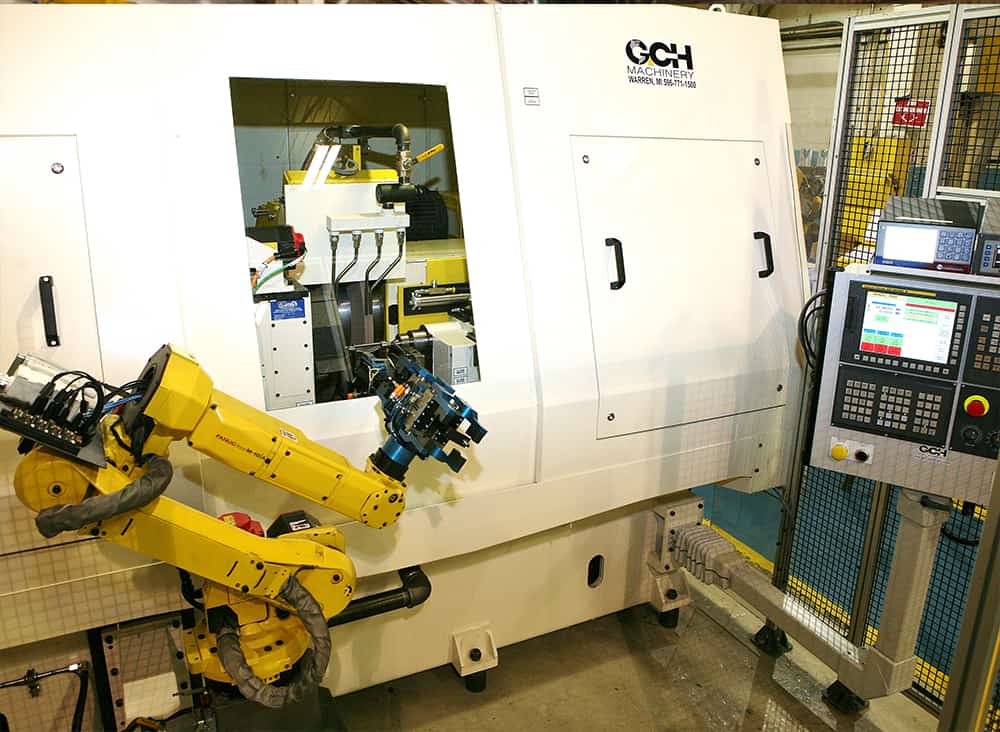
Precision is the backbone of automotive drivetrain component manufacturing. Parts like transmission shafts, gears, axle components, and bearing journals rely on high-precision grinding to function correctly. Even minor grinder issues can lead to dimensional errors, heavy vibration, and poor surface finishes. Unfortunately, many manufacturers misdiagnose these mechanical wear issues as simple CNC or operator errors. However, the most effective, long-term solution to restore accuracy and production stability is professional grinder rebuilding.
Why Grinding Accuracy Is Critical in Automotive Drivetrain Production
In the automotive sector, exact specifications are not optional. Implementing the right grinding solutions for automotive manufacturing ensures that tight tolerances are met consistently.
This level of precision is non-negotiable on the shop floor for several key reasons:
- Tight tolerances ensure proper fit and smooth drivetrain operation.
- Vehicle performance and durability depend directly on component accuracy.
- Automotive quality standards enforce strict safety and compliance requirements.
- High production volumes demand consistent, repeatable precision.
Early Warning Signs of Grinder Problems in Automotive Plants
Catching mechanical degradation early can save your plant from costly downtime. By identifying the early warning signs of grinder problems, you can intervene before minor wear turns into catastrophic machine failure.
Keep a close eye out for these common indicators during production:
- Inconsistent surface finish on completed drivetrain components.
- Taper or roundness errors that fall outside of acceptable limits.
- Increased grinding vibration or unusual machine noise.
- Growing reliance on CNC compensation to mask dimensional drift.
- Poor repeatability from one production shift to the next.
Common Failure Points in Grinders
In automotive drivetrain manufacturing, grinding machines operate under sustained high-precision, high-volume conditions—particularly when producing components such as transmission shafts, gear journals, and axle elements. Over time, cumulative mechanical wear affects even the most robust cylindrical and specialty grinders. Understanding these application-specific failure points allows maintenance teams to address root causes rather than relying on temporary fixes or CNC compensation.
Failure Point #1: Worn Guideways & Machine Ways
Continuous high-volume grinding and coolant contamination inevitably accelerate wear on guideways. This is especially true for machines like cylindrical grinders for automotive shafts, where axis precision is paramount.
This wear typically manifests through operational symptoms, such as tapered parts and inconsistent geometry and axis positioning errors that disrupt the grinding cycle.
A comprehensive rebuild can permanently fix these issues by:
- Performing precision hand scraping and way grinding.
- Executing Turcite replacement or surface restoration.
- Realigning complete machine geometry to better-than-new standards.
Failure Point #2: Spindle Wear & Imbalance
Spindle issues are notorious for destroying surface finish. Because symptoms like grinding vibration and chatter marks appear on drivetrain components, this problem is often misdiagnosed as wheel imbalance or temporary setup errors, leading to temporary CNC adjustments that only mask the issue.
Rebuilding provides a permanent mechanical solution through:
- Complete spindle teardown and rigorous inspection.
- Replacing old components with new matched precision bearing sets.
- Dynamic spindle balancing and runout correction to OEM tolerance specifications.
Failure Point #3: Ball Screw Wear & Axis Backlash
When a machine loses its repeatable positioning, ball screw wear is usually the culprit. While many plants look to grinder control retrofit and upgrades to solve positioning errors, software alone cannot eliminate mechanical play or compensate for physical backlash.
To truly fix positioning errors and restore repeatability, rebuilding involves:
- Ball screw repair or complete replacement with precision ground ball screws and matched nuts.
- Servo system tuning and alignment with mechanical axis geometry.
- Thorough axis motion calibration.
Failure Point #4: Structural Fatigue & Machine Base Settling
Years of heavy loads and continuous vibration can cause older machines to settle. In heavy-duty applications requiring drivetrain gear grinding machine remanufacturing, structural fatigue often leads to chatter during heavy operations and accuracy drift across long production runs.
Rebuilding restores structural stability via:
- Complete structural inspection at the casting level.
- Precise machine re-leveling and physical alignment.
- Extensive geometry validation testing to ensure stability.
Failure Point #5: Coolant System Degradation Affecting Grinding Accuracy
Coolant systems are frequently treated as basic maintenance items rather than critical precision components. However, degraded systems easily lead to thermal distortion, premature tool wear, and grinding wheel glazing.
A complete machine rebuild addresses this fundamental issue by incorporating:
- A total coolant system overhaul.
- Improved filtration (often down to 1–3 µm, depending on application requirements) and better flow management.
- Improved thermal stability for consistent grinding performance.
When Automotive Manufacturers Should Consider Grinder Rebuilding
Sometimes, standard repairs are no longer enough to maintain production metrics. Knowing when to opt for industrial grinder remanufacturing or a targeted CNC grinder rebuild for automotive drivetrain parts is key to maximizing your equipment’s ROI.
It is time to consider a full rebuild when you experience:
- Persistent vibration despite regular maintenance and parts replacement.
- Rising scrap or rework rates that hurt the bottom line.
- Difficulty meeting exact drivetrain tolerances on a consistent basis.
- Aging grinding machines that remain critical to your production line.
- CNC and software upgrades failing to restore physical accuracy.
How Complete Grinder Rebuilding Restores Automotive Manufacturing Precision
Unlike a quick repair job, grinding machine rebuilding services involve stripping the equipment down to the casting and replacing or restoring every critical system. This extensive process guarantees long-term stability and geometry.
The core steps of this transformative process include:
- Full machine teardown, cleaning, and detailed inspection.
- Complete geometry restoration and laser alignment verification.
- Comprehensive spindle, way, and feed system rebuilding.
- Extensive performance testing, including SPC validation and Cp/Cpk capability studies.
- Extended machine life with dramatically improved production reliability.
Why Choose GCH Machinery for Grinder Rebuilding
Grinder failures in the automotive industry are almost always caused by cumulative mechanical wear. Issues like surface finish degradation, heavy vibration, and accuracy loss are system-level problems that require comprehensive solutions. Whether you need general grinder rebuilding or specialized cylindrical grinder rebuilding services, professional remanufacturing restores the precision and reliability your plant requires.
Partnering with a recognized specialist like GCH Machinery ensures your shop maintains flawless drivetrain quality while dramatically reducing costly downtime. If your machines are struggling to hit tolerances, don’t settle for temporary fixes. Contact GCH Machinery today to restore your manufacturing precision with an expert grinder rebuild.