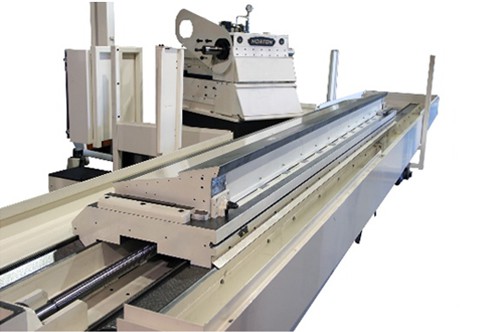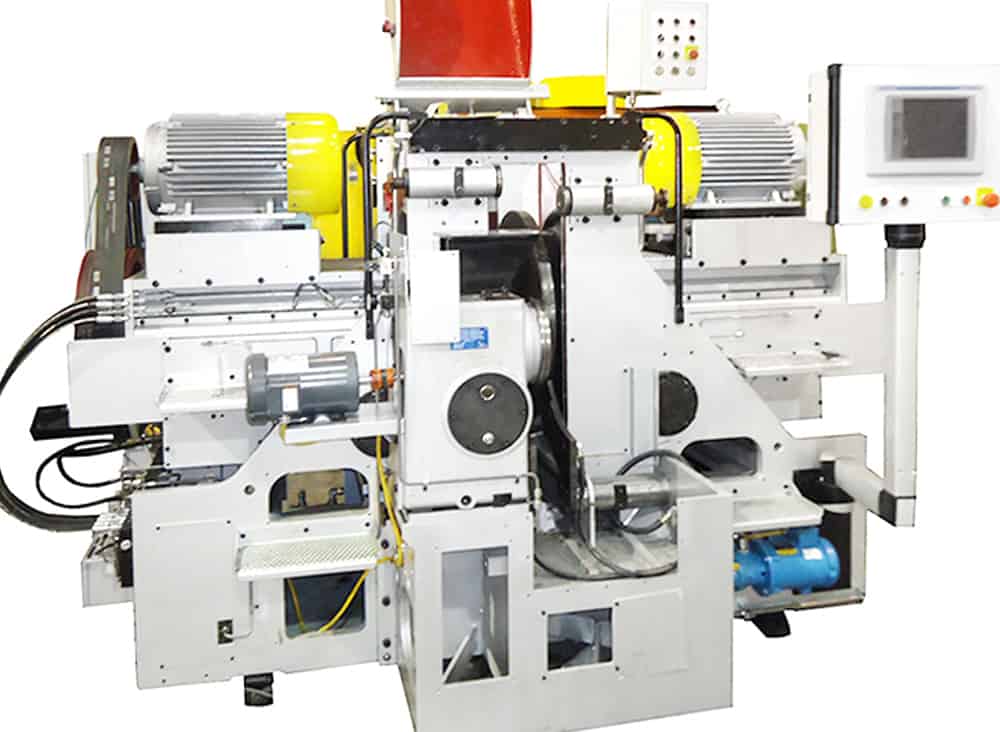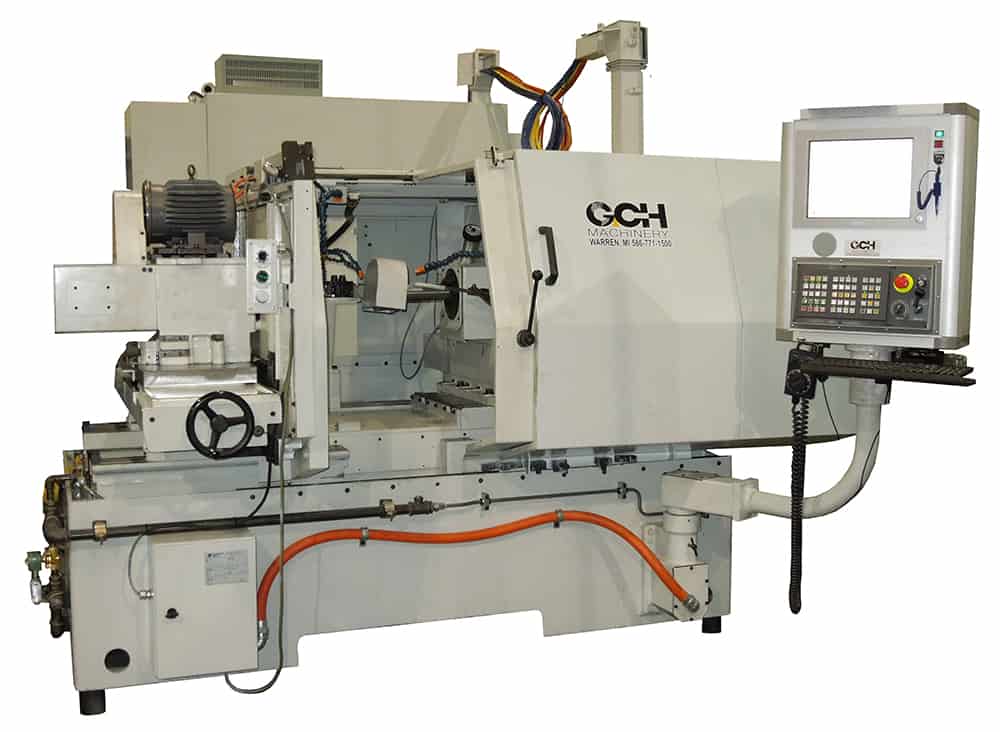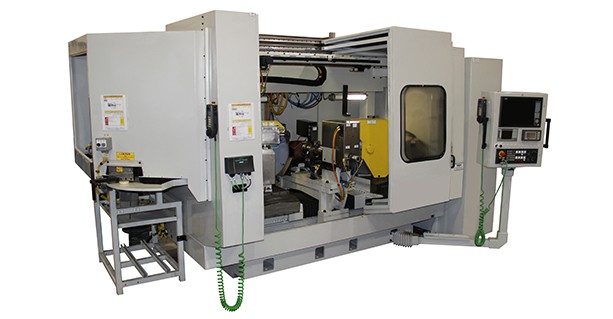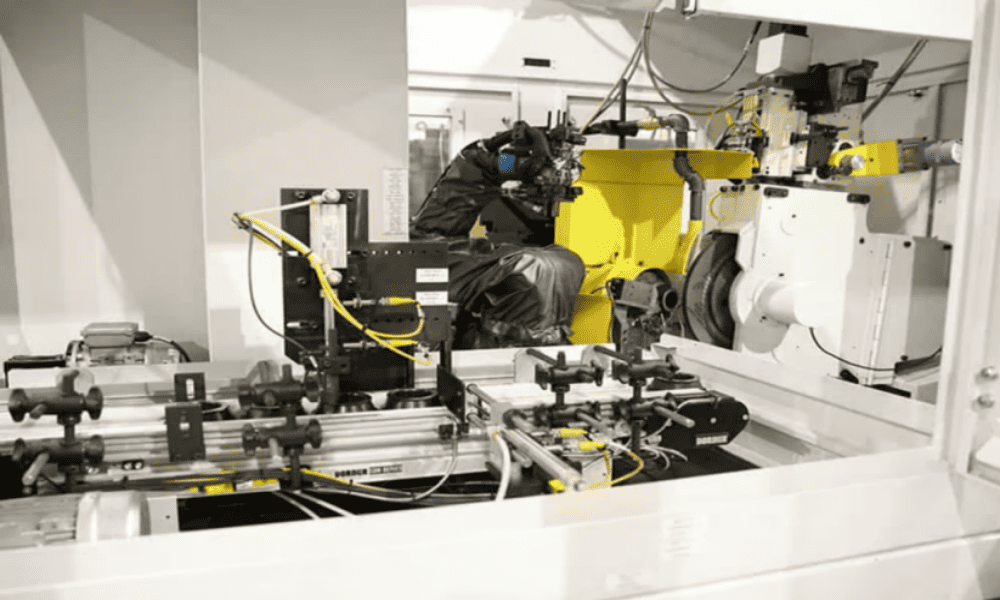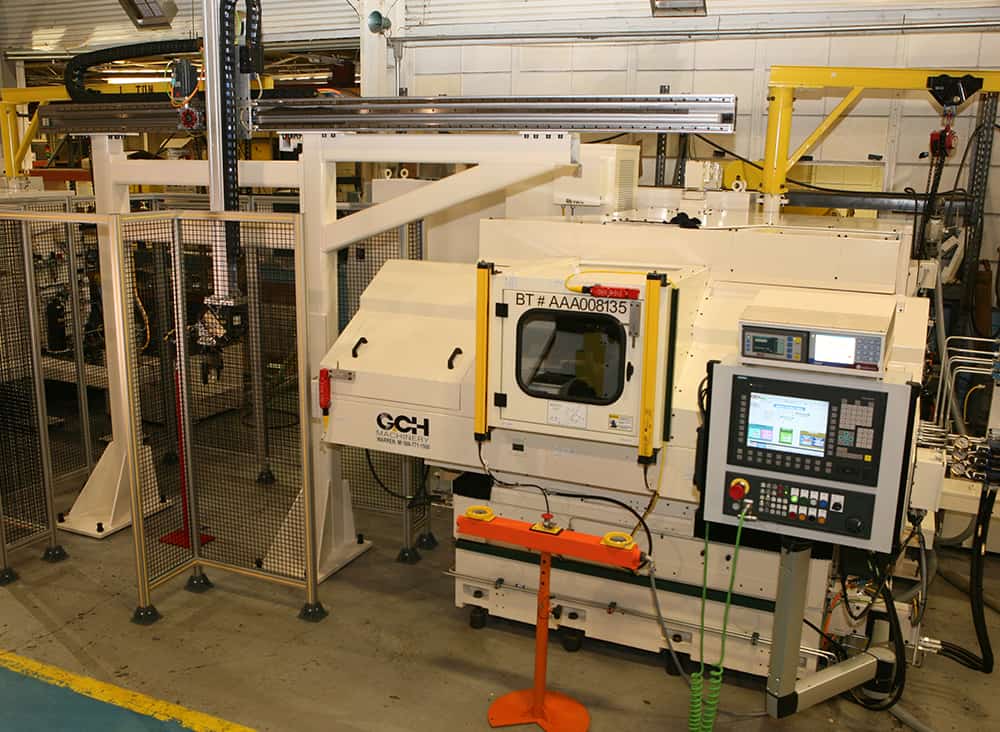

What many manufacturers don’t realize is that a significant portion of surface defects in oilfield components aren’t caused by materials or operators—they’re caused by the grinding machines themselves. Worn spindles, outdated control systems, misaligned guideways, and failing coolant delivery can silently undermine part quality on machines that otherwise appear to be running fine.
The good news: grinding machine retrofitting and remanufacturing offers a proven, cost-effective path to restoring the precision your oilfield components demand. GCH Machinery’s services go far beyond swapping out controls—they include the hand scraping of every mating surface, rebuilding of both conventional and hydrostatic spindles, and a complete restoration of the machine geometry that precision grinding requires.
Why Surface Finish Matters in Oilfield Component Manufacturing
Oilfield components must perform reliably under conditions that would destroy lesser parts. Surface finish is not an aesthetic concern—it is an engineering requirement with direct implications for safety, compliance, and operational life.- Sealing performance: Valves, flanges, and pump components depend on ultra-precise surface finish to maintain leak-free seals under high pressure. Even minor roughness or waviness can create leak paths that compromise system integrity.
- Corrosion resistance: A consistent, smooth surface finish is more resistant to corrosion and pitting. Irregular surfaces trap moisture, chemicals, and contaminants that accelerate degradation.
- Fatigue life: Surface irregularities create stress concentration points. In cyclically loaded components, these micro-defects are where fatigue cracks initiate and propagate.
- API compliance: Many oilfield components must meet American Petroleum Institute (API) standards that specify precise surface finish and dimensional tolerances. Defective parts don’t pass inspection—they generate scrap and rework.
Common Surface Grinding Defects in Oilfield Parts
Rough or Uneven Surface Finish
Visible as inconsistent texture across the part surface. Usually caused by wheel loading, improper dressing, or inconsistent grinding pressure resulting from worn machine components or axis stick-slip caused by degraded way surfaces.Burn Marks and Thermal Damage
Discoloration or surface hardness changes caused by excessive heat at the grinding interface. The most common culprits are inadequate coolant delivery and spindle bearing wear generating excess heat.Chatter Marks
Periodic, evenly spaced surface waves that indicate vibration in the grinding system. Chatter traces directly to spindle bearing degradation, wheel imbalance, or the stick-slip motion that worn, improperly scraped way surfaces produce.Out-of-Roundness and Taper
Dimensional errors where the part does not conform to its specified geometry. These defects trace back to machine misalignment—worn and unscraped guideways, slides, or a spindle that has drifted from true.Microcracks and Residual Stress
Subsurface damage caused by thermal damage, abusive grinding conditions, or inadequate coolant filtration. Invisible to the naked eye but capable of causing premature fatigue failure in oilfield service.Top Causes of Surface Grinding Defects in Oilfield Manufacturing
- Worn spindle assemblies: Spindle bearing wear introduces runout and vibration directly into the grinding interface, causing chatter, rough finish, and dimensional instability.
- Degraded way surfaces: When slides and guideways wear without proper scraping and oil retention, stick-slip motion introduces micro-positioning errors and vibration into every grinding pass.
- Machine misalignment: When guideways wear unevenly, the grinding wheel no longer travels in the precise path required, producing taper, out-of-roundness, and geometry errors.
- Outdated control systems: Older CNC and PLC controllers cannot maintain the tight, consistent process parameters that modern oilfield tolerances demand.
- Poor coolant delivery: Clogged nozzles, failing pumps, and inadequate filtration mean the grinding zone runs too hot and too dirty.
- Grinding wheel imbalance: An unbalanced wheel transmits vibration through the spindle and into the part, producing chatter marks and inconsistent surface finish.
How Does GCH Retrofitting and Remanufacturing Fix Surface Defects?
A GCH retrofit addresses root causes directly—not with patches, but with precision engineering. The most critical elements of GCH’s process are ones that most manufacturers never see: the hand scraping of every mating surface and the rebuilding of every spindle assembly.Hand Scraping of Slides, Ways, and Mating Surfaces
One of the most important—and least understood—aspects of GCH’s remanufacturing process is hand scraping. In an era of CNC machining and automated surface finishing, hand scraping remains the gold standard for restoring the precision geometry and lubrication characteristics that grinding machines demand. GCH craftsmen hand scrape and flake every critical mating surface on every machine we remanufacture.The process works by applying a thin coat of engineer’s blue (Prussian blue in an oil base) to a precision reference surface. When the mating component is laid against it, the blue transfers only to the high spots on the workpiece. The scraper removes those high spots, and the process repeats—pass by pass—until the contact pattern achieves the precise, evenly distributed bearing area that precision grinding demands. Fine scraping produces 24–36 contact points per square inch, a level of accuracy no grinding or milling operation can reliably achieve on large castings.
Why Hand Scraping Cannot Be Replaced by Machine Grinding
Large grinding machine castings cannot always be fixtured in a surface grinder—hand scraping is the only method that can true mating surfaces in place. Machine grinding produces a uniform surface that actually resists oil film formation. Hand scraping creates the precise combination of high bearing points and oil retention pockets that precision sliding surfaces require.Hand scraping corrects the specific, irregular wear patterns of each individual machine—something automated processes cannot replicate.
Oil Retention and the Flaking Process
Precision grinding machines require a continuous, uninterrupted oil film between all sliding surfaces—the worktable, cross slide, wheel head, and infeed mechanisms. Without it, the stick-slip phenomenon occurs; i.e., surfaces momentarily bind together, then lurch forward, introducing micro-vibration and positioning errors that show up directly in part surface finish and dimensional accuracy.GCH addresses this through flaking—the decorative half-moon pattern visible on properly remanufactured grinding machine ways. Flaking creates a network of shallow oil reservoirs across the surface. These pockets trap and hold lubricating oil under surface tension, maintaining the oil film across the entire bearing area throughout the machine’s motion. The result is smooth, consistent, vibration-free axis movement—the foundation of repeatable part quality.
The flaking pattern is not merely cosmetic. It is evidence that a craftsman has done the work correctly. When you see a properly flaked way surface on a GCH-remanufactured machine, you are looking at the reason that machine will hold tolerance shift after shift, year after year.
Spindle Rebuilding: Precision Bearings and Hydrostatic
The spindle is the heart of any grinding machine. Everything—surface finish, dimensional accuracy, chatter behavior, and long-term consistency—originates at the spindle. GCH’s remanufacturing process treats spindle rebuilding with the same level of care and technical rigor as the rest of the machine, with full capability to rebuild both conventional anti-friction bearing spindles and the more demanding hydrostatic bearing systems found on high-precision grinders.Anti-Friction Bearing Spindle Rebuilding
For wheel head and work head spindles equipped with precision roller or ball bearings, GCH’s rebuilding process begins with complete disassembly and dimensional inspection of every component—housing bores, shaft journals, shoulders, and faces—checked to tolerances down to half a micron. All housing bores and shaft surfaces are restored to better than OEM tolerances. New ABEC 7 or higher precision bearings—equal to or exceeding original OEM specification—are installed and pre-loaded to the correct specification for the machine’s application.Dynamic balancing of all rotating components is performed on ultra-precision balancing equipment before assembly. After final assembly, every spindle is run for a minimum of eight hours on dedicated test stands, with vibration analysis, temperature monitoring, and runout verification performed at multiple speeds. The spindle does not leave GCH until it meets or exceeds new OEM specifications. A detailed test report and balance analysis ships with every rebuilt spindle.
Hydrostatic Spindle Rebuilding
Hydrostatic and hydrodynamic spindles are found on the highest-precision grinding machines—OD grinders, centerless wheel heads, and other applications where frictionless operation and extreme rotational accuracy are required. These spindles use a pressurized oil film rather than rolling elements to support the shaft, achieving near-zero runout and exceptional vibration damping that anti-friction bearings cannot match.When a hydrostatic spindle fails, the bearing surfaces and shaft mating surfaces are typically damaged together. Restoration requires precision grinding of both surfaces and meticulous matching of the clearance between them—a gap measured in microns that must be precisely aligned to restore proper hydrodynamic performance. This is exacting work that requires specialized equipment and years of experience. GCH’s spindle specialists have that experience across the full range of hydrostatic grinding spindle types, including wheel head spindles, work head spindles, and centerless wheel spindles.
Critical to any hydrostatic spindle repair is thorough cleaning and flushing of the machine’s entire oil lubrication system. Metallic contamination from a failed spindle will recontaminate a newly rebuilt one—GCH addresses this systematically as part of every hydrostatic spindle remanufacturing project.
GCH Spindle Rebuilding: What Every Rebuilt Spindle Includes
- Complete disassembly, chemical cleaning, and dimensional inspection to sub-micron tolerances
- Restoration of all housing bores, shaft journals, and bearing seats to better than OEM specification
- New ABEC 7 or higher precision bearings (anti-friction) or precision-matched bearing surfaces (hydrostatic)
- Dynamic balancing of all rotating components on ultra-precision equipment
- Minimum 8-hour test run with vibration analysis, temperature monitoring, and runout verification
- Detailed test report and balance analysis shipped with every spindle
- Meets or exceeds new OEM specifications—backed by GCH’s full warranty
CNC and Control System Modernization
GCH installs modern Siemens CNC systems with color HMI interfaces, replacing aging controls that can no longer maintain consistent process parameters. Modern controls enable tighter cycle repeatability, closed-loop feedback, and automation capabilities that remove operator variability from every grinding pass.Enhanced Coolant and Filtration Systems
GCH upgrades coolant delivery systems with high-pressure, precision-directed nozzles and modern filtration that removes grinding swarf and contaminants from the coolant loop. Clean, properly directed coolant eliminates thermal damage, burn marks, and the subsurface microcracks that cause premature part failure in oilfield service.Wheel Balancing and Dressing System Upgrades
Automatic wheel balancing systems continuously compensate for mass imbalance as the wheel wears. Upgraded dressing systems ensure the wheel face is always properly conditioned, delivering consistent cutting action and predictable surface finish.Why Choose GCH Machinery
65+ Years of Grinding ExpertiseFounded in 1960, GCH Machinery is the world’s largest grinding systems integrator. With more than 150 combined years of application experience on our engineering team and over 10,000 customers worldwide, we bring the depth of knowledge that oilfield precision demands to every retrofit and remanufacturing project.
Eliminate Surface Grinding Defects with Expert Grinder Retrofitting Solutions
Surface defects in oilfield components are not just quality problems—they are safety risks, compliance failures, and production costs that compound over time. The root cause is often the grinding machine itself: worn ways that have never been properly scraped, spindle bearings that have degraded beyond their ability to hold runout, and control systems that can no longer maintain process consistency.GCH Machinery’s retrofitting and remanufacturing services address those root causes at the foundation level, restoring the precision geometry, oil-film lubrication, and spindle performance that consistent oilfield component quality demands.