
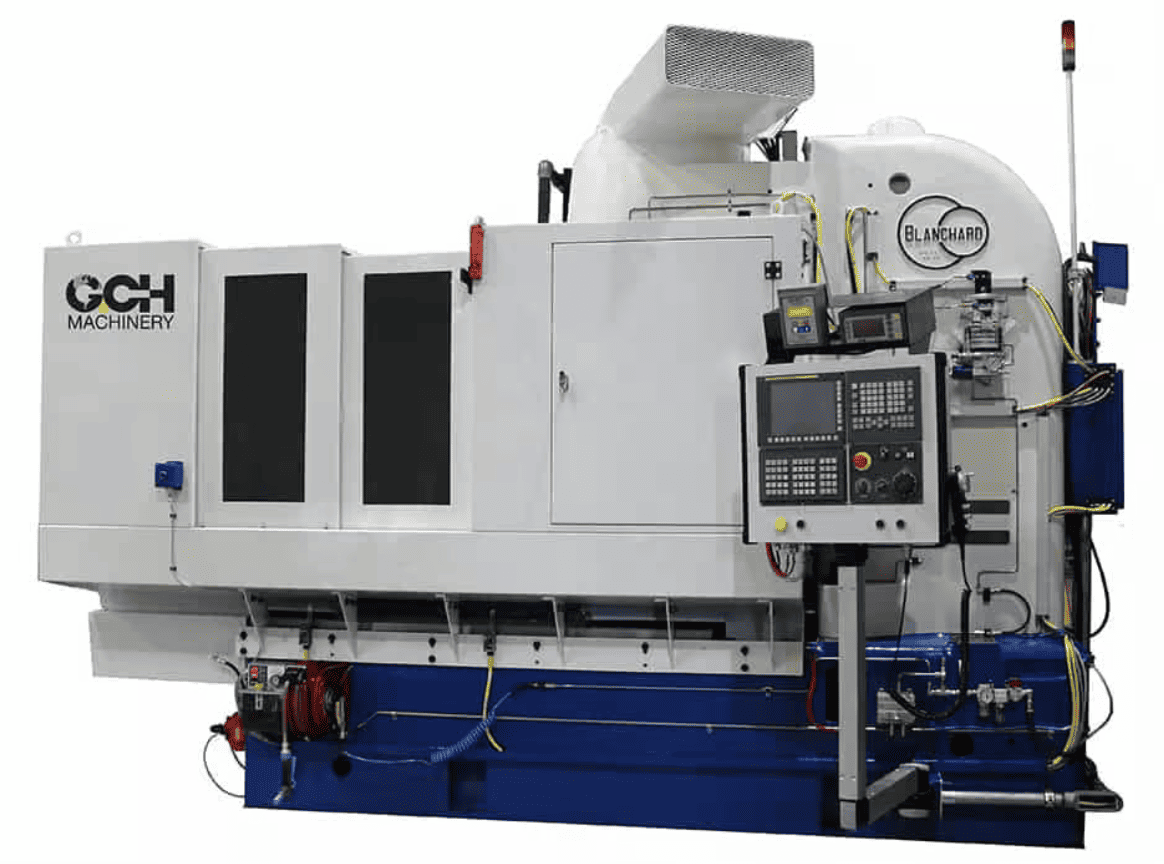
Many facility managers discover their current machinery struggles to hold these tight tolerances. However, replacing an entire fleet of industrial equipment requires massive capital investment and long lead times. Instead of purchasing entirely new systems, manufacturers are turning to grinder remanufacturing.
By completely restoring and modernizing existing equipment, manufacturing facilities can achieve OEM specifications or better while significantly improving productivity. This approach provides a highly effective pathway to scale operations without the financial strain of buying brand-new machinery.
Why Grinding Accuracy Matters in EV Component Production
Producing EV parts requires a fundamentally different approach to precision than traditional internal combustion engines. Grinder remanufacturing for EV manufacturing ensures that your facility can meet these elevated standards effectively.High-precision grinding impacts several critical aspects of EV component production:
- Efficiency: Smooth, perfectly dimensioned parts reduce friction in the drivetrain, allowing the vehicle to maximize battery range.
- Safety: Precision grinding helps ensure proper sealing and fitment of critical EV components, including battery-system and drivetrain components.
- Product lifespan: Accurately ground components experience less wear over time, extending the operational life of the vehicle.
- Environmental impact: Efficient grinding processes reduce material scrap and minimize the energy consumption of the manufacturing process itself.
Why Tight Tolerances Are Crucial in EV Component Manufacturing
EVs operate differently than traditional cars, making tight tolerances an absolute necessity. Specialized operations, such as precision bearing bore grinding, require equipment capable of maintaining extremely tight tolerances and repeatability.When EV components are manufactured to exacting tolerances, the resulting vehicles benefit from several key improvements:
- Reduced vibration throughout the drivetrain
- Improved rotational balance for high-speed electric motors
- Better thermal efficiency due to precise part mating and reduced friction
- Longer component lifespan across the entire drivetrain assembly
- Lower noise levels (particularly crucial because EVs lack an engine to mask mechanical sounds)
Common Accuracy Problems in Aging Grinding Machines
Legacy machines operating in today’s demanding environments frequently struggle to maintain the required specifications. A comprehensive grinder rebuild or remanufacturing project can address the mechanical degradation that naturally occurs over decades of heavy useOlder grinding machines typically exhibit several common accuracy issues that disrupt EV production:
- Surface finish inconsistencies that lead to rejected parts
- Taper and geometry errors causing improper fits
- Spindle vibration that leaves chatter marks on the workpiece
- Thermal instability causing dimensional drift throughout the workday
- Hydraulic table wear or instability leading to inconsistent machine movement and positioning
- Wheel chatter that compromises the final surface profile
- Repeatability problems that make automated production nearly impossible
Grinder Remanufacturing in EV Manufacturing Facilities
Transforming an aging machine into a state-of-the-art production asset requires comprehensive intervention. Top-tier grinder remanufacturing services go far beyond simple repairs or repainting; they completely dismantle the machine to the bare casting and rebuild it using new or remanufactured components.While rebuilding focuses primarily on restoring mechanical components and retrofitting emphasizes control and automation upgrades, remanufacturing combines both approaches to deliver a machine capable of meeting modern production requirements.
During this process, engineers assess the current limitations of the machine and identify necessary modifications to improve efficiency for EV parts. By leveraging both professional industrial grinder rebuilding services and retrofitting options in the grinder remanufacturing process, manufacturers can re-engineer their equipment to include high-efficiency motors, mist-containment systems, updated controls, and automation technologies that support productivity and environmental goals.
How Grinder Remanufacturing Restores Precision Performance
Restoring a machine to peak condition involves a rigorous, multi-step engineering process. CNC grinder remanufacturing integrates modern technology with heavy-duty cast iron bases, providing the ultimate combination of rigidity and digital control.This comprehensive restoration process includes several vital EV grinding machine upgrades:
- Complete mechanical rebuilding, including the hand-scraping of ways for flawless geometry
- Spindle rebuilding and balancing to minimize vibration and improve rotational accuracy
- Hydraulic, lubrication, and coolant restoration to maintain thermal stability
- Electrical and CNC retrofits to enable complex, automated grinding cycles
Why Manufacturers Choose GCH Machinery for Grinder Upgrades
GCH Machinery delivers complete, turnkey grinding systems worldwide that increase productivity and reliability. When investing in grinder upgrades, manufacturers need a partner that takes total responsibility for the entire project, from design through installation.GCH Machinery provides unparalleled expertise, featuring a state-of-the-art metrology laboratory to verify that every machine meets stringent global standards. With over 60 years of experience, GCH engineers design custom solutions that seamlessly integrate automation, gaging, and factory information systems, allowing you to accelerate production startup following installation and commissioning.
Modernize Your Grinding Equipment for EV Production
Precision grinding is absolutely critical for long-term success in the competitive EV manufacturing sector. Fortunately, aging grinders can still achieve modern, micron-level tolerances through professional remanufacturing.By investing in grinder remanufacturing, you can restore machine accuracy, reduce surface defects, stabilize your production lines, and meet the high standards required for electric vehicle components. By combining industrial grinder rebuilding services with grinder retrofitting services — including control and automation upgrades — manufacturers can save money while gaining a customized, highly efficient manufacturing solution tailored to their exact needs.
Don’t delay in modernizing your grinding machines for EV production. Request a quote from GCH Machinery today for a custom remanufacturing plan for your facility.
*Required fields
*Required fields
*Required fields
*Required fields
*Required fields
*Required fields
*Required fields
*Required fields