
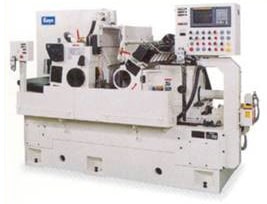
When a shop invests in a Koyo grinder CNC control upgrade without first addressing mechanical degradation, the results are often disappointing. Poor repeatability persists. Surface finish remains inconsistent. Servo tuning becomes a frustrating exercise in futility. This is because the issue isn’t the controls—it’s the foundation they’re built upon.
Koyo grinder rebuilding isn’t optional maintenance. It’s the necessary first step that makes control upgrades effective. Without it, you’re installing precision technology on a compromised platform.
The Mechanical Reality of Aging Koyo Grinders
Koyo grinding machines are built to last, but decades of production inevitably take their toll. Even with diligent maintenance, key mechanical systems gradually wear down beyond acceptable tolerances.Guideways lose their straightness. Spindle bearings develop play. Machine bores drift out of round. These changes happen slowly but compound over time. A machine that once delivered tight tolerances may now struggle to hold half that precision.
The problem isn’t neglect; it’s physics. Metal-to-metal contact, thermal cycling, and constant loading create wear patterns that no amount of lubrication can prevent.
Koyo grinding machine rebuilding addresses this reality by restoring components to their original geometry, not just maintaining what’s left.
Why CNC Control Upgrades Depend on Mechanical Precision
Modern CNC controls are remarkably capable. They can compensate for some irregularities, learn motion profiles, and adjust for thermal drift. But they can’t compensate for worn guideways or loose spindle bearings.Here’s why: CNC systems depend on three critical factors—accurate geometry, stable feedback, and consistent axis movement. When guideways are worn, the machine can’t move in a straight line. When spindles have excessive runout, position feedback becomes meaningless. When bores are out of round, repeatability disappears.
Controls execute commands. They don’t correct physical wear. A servo system can position an axis to within microns, but only if the mechanical system can support that level of precision. Installing new controls on degraded mechanics simply creates a faster way to produce inconsistent parts.
What Happens When Koyo Grinder Controls Are Upgraded Without Rebuilding
Skipping grinder remanufacturing before installing new controls creates predictable problems. Shops that skip rebuilding before a control upgrade report similar issues across different Koyo models and applications:- Poor repeatability despite new controls tops the list. The CNC returns to programmed positions accurately, but parts come out differently every cycle. The controls are doing their job—the mechanics aren’t.
- Persistent vibration or chatter continues even with modern dampening algorithms. Worn bearings and loose components create dynamic instabilities that software can’t eliminate.
- Servo tuning difficulties frustrate technicians. They can’t achieve stable motion because the mechanical system introduces unpredictable variables. What should take hours stretches into days.
- Encoder and feedback errors become routine. When machine geometry shifts with load or temperature, feedback systems report positions that don’t match physical reality.
- Inconsistent surface finish remains the most visible problem. New controls should improve finish quality, but worn wheel heads and degraded ways prevent the machine from holding the required motion profile.
The Difference Between Maintenance, Repair, & Full Koyo Grinder Rebuilding
Understanding the distinction between these three approaches is essential for planning effective modernization. Here’s a breakdown:- Maintenance keeps machines running. Regular lubrication, filter changes, and fluid management prevent catastrophic failures and extend component life. Understand that maintenance can’t reverse wear that’s already occurred.
- Repairs fix isolated failures. When a motor burns out or a pump fails, repairs restore functionality. However, they don’t address the cumulative wear across the entire machine.
- Rebuilding restores original geometry and tolerances. This comprehensive process involves disassembly, measurement, scraping, and component replacement. Ways are re-ground or hand-scraped to original straightness. Spindles are rebuilt or replaced. Bores are line-bored back to specification. The machine returns to—or exceeds—its original capability.
How Koyo Grinder Rebuilding Prepares Machines for Control Upgrades
The rebuilding process directly supports control performance. Each step addresses mechanical issues that would otherwise limit CNC capabilities.Guideway restoration ensures axis movement follows programmed paths precisely. When ways are straight and parallel, encoders provide accurate feedback and servos can achieve commanded positions reliably.
Spindle rebuilding eliminates runout and bearing play. Modern controls can compensate for predictable errors, but random variations from worn spindles make compensation impossible.
Bore and alignment work ensures all machine axes are truly perpendicular. CNC interpolation depends on geometric accuracy—if X and Y aren’t square, circular interpolation produces ovals instead of circles.
Lastly, addressing grinder accuracy and repeatability issues during rebuilding maximizes the return on control upgrades. The mechanical precision enables the control system to deliver its full potential.
The Right Modernization Sequence for Koyo Grinders
Successful grinder modernization strategy follows a proven sequence:- Mechanical evaluation: We measure geometric accuracy, spindle runout, and component wear. This assessment determines whether rebuilding is necessary and identifies which systems need attention.
- Full grinder rebuilding: Should it be required, this restores the machine to its original specifications or better. Rebuilding creates the stable platform that modern controls require.
- CNC control upgrade: With sound mechanics, the new system can achieve its design capabilities. Programming becomes straightforward, tuning proceeds smoothly, and expected improvements materialize.
- System tuning and validation: Final optimization ensures mechanical and electronic systems work together seamlessly. We run test parts, measure results, and verify that the performance meets requirements.
Why Choose GCH Machinery for Koyo Grinder Rebuilding
GCH Machinery brings over 55 years of specialized experience in precision grinder remanufacturing to the table. Our expertise extends across all Koyo models, with comprehensive capabilities that support complete modernization projects.GCH Machinery’s rebuilding process combines world-class manufacturing practices with state-of-the-art metrology. Our multi-million-dollar laboratory equipped with Carl Zeiss inspection equipment ensures every machine meets or exceeds original specifications. No other rebuilder offers this level of verification.
The team’s engineering depth sets them apart. With more than 150 years of combined experience specifically in grinding applications, we understand not just how to rebuild machines but also how to optimize them for specific processes. GCH Machinery has completed over 1,500 grinder remanufacturing projects, developing proven methodologies that minimize downtime and maximize performance.
GCH Machinery provides turnkey solutions that go beyond mechanical rebuilding. We integrate automation, develop grinding processes, and manage complete modernization projects from evaluation through installation. This comprehensive approach ensures mechanical rebuilding and control upgrades work together seamlessly.
Our global support network and commitment to long-term customer success make us the preferred partner for manufacturers who demand excellence. When you choose GCH Machinery for Koyo grinder rebuilding, you’re not just rebuilding a machine—you’re investing in sustained competitive advantage.
A Universal Principle in Precision Grinding Modernization
The basic principle here extends far beyond Koyo grinders. Whether you’re modernizing a Cincinnati, Landis, or any other precision grinding machine, the foundation must come first.CNC controls enhance precision only when the machine can support them. No amount of software sophistication compensates for worn mechanics. Modern motion controllers, faster processors, and advanced algorithms deliver their promised benefits only when mounted on a geometrically sound platform.
Rebuilding is not an added cost—it’s the foundation of modernization. Treating it as optional or deferring it to save money virtually guarantees disappointing results. The shops that achieve genuine transformation understand this sequence and commit to doing the work properly.
Before upgrading controls, evaluate your machine’s mechanical condition honestly. Measure critical parameters. Assess component wear. Determine whether your existing platform can support the technology you’re planning to add.
If mechanical degradation has occurred, address it first. Restore geometric accuracy. Replace worn components. Create the stable foundation that modern controls require.
Then upgrade with confidence, knowing your investment will deliver its full potential.
Ready to extend the life of your Koyo grinding machines? Start with a comprehensive mechanical evaluation from GCH Machinery. Our expert assessment will determine the most effective path to modernization—one that delivers lasting performance improvement, not temporary fixes that disappoint. Contact us today to discuss your Koyo grinder rebuilding needs and take the first step toward true modernization.
*Required fields
*Required fields
*Required fields
*Required fields
*Required fields
*Required fields
*Required fields
*Required fields